Open almost any garage, barn or shop and you will find a few of them: a dead alternator pulled off a project car, a starter that stopped cranking, an air conditioning compressor left over from a repair. They feel too heavy to throw away and too broken to use. The good news is that they are built from metals a scrap yard wants.
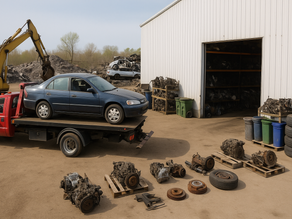
Here is what is inside these parts, how they are typically valued, and how to prepare them before you head to a local yard in Bellevue.
What Is Inside Each Part
Alternators
An alternator is a compact bundle of copper windings wrapped around a steel core, held in an aluminum housing. That mix of non-ferrous and ferrous metal is what gives it scrap value.
Starters
A starter motor has copper windings, steel and cast iron components, and often an aluminum end housing. Because steel makes up much of the weight, the per-pound value is usually different from an alternator’s.
AC Compressors
A compressor is mostly aluminum and steel, plus internal parts and a clutch assembly. It is the part most likely to contain leftover oil and, if it came from a charged system, refrigerant.
How Yards Typically Value Them
Scrap yards price these parts by weight and by the metals they contain, so the figure moves with the market. Exact numbers change, so call ahead rather than relying on a number you saw months ago. Several things affect what you are offered:
- Whether the part is whole. Many yards want complete units rather than pieces.
- The copper content. Parts with a higher share of copper windings tend to be valued better than mostly steel parts.
- How clean it is. Plastic, rubber, wiring harnesses and heavy grease can all be adjusted for.
- How much you bring. A single alternator is a small sale; a bucket of mixed motors is a better reason for the trip.
MK Recycling buys these items. Our Bellevue yard lists starters, alternators, AC compressors, electric motors, die cast, aluminum and chrome rims, car batteries and other metals among the materials it purchases. For the broader picture on how copper markets affect your check, see copper prices and your scrap metal payout.
How to Prep Your Parts
- Keep them whole. Do not take units apart unless the yard asks you to. Disassembly rarely pays for the time.
- Drain oil. Let residual fluids drain into a proper container and take them to a recycler. See our guide to recycling car fluids safely.
- Do not vent refrigerant. If a compressor came from a charged AC system, have the refrigerant recovered by a qualified shop before removing the compressor. Releasing it into the air is not allowed.
- Remove loose non-metal pieces such as plastic covers, brackets that are not steel and rubber hoses.
- Separate by type. Alternators in one bin, starters in another, compressors in a third, and keep all of them apart from plain steel scrap.
Sell Them, or Is There Reuse Value?
If a part came off a late-model vehicle and the unit was working when it was removed, it may be worth more as a usable replacement than as scrap. Be honest with yourself about the condition. Anything seized, burned out, cracked or leaking should go for recycling. For tested used parts, read how salvage yards inspect used mechanical parts.
Bring a Load, Bring ID
Ohio scrap dealers are required to record seller information, so bring a valid photo ID. For more selling habits that raise your payout, our post on 6 proven tips for selling scrap metal is a good companion.
Have a pile of old starters and alternators taking up bench space? Call MK Recycling at 419-706-2807 to ask what we are paying and what we would like to see before you load up. We are at 938 St. Rt. 113 in Bellevue. You can also send us a message.